


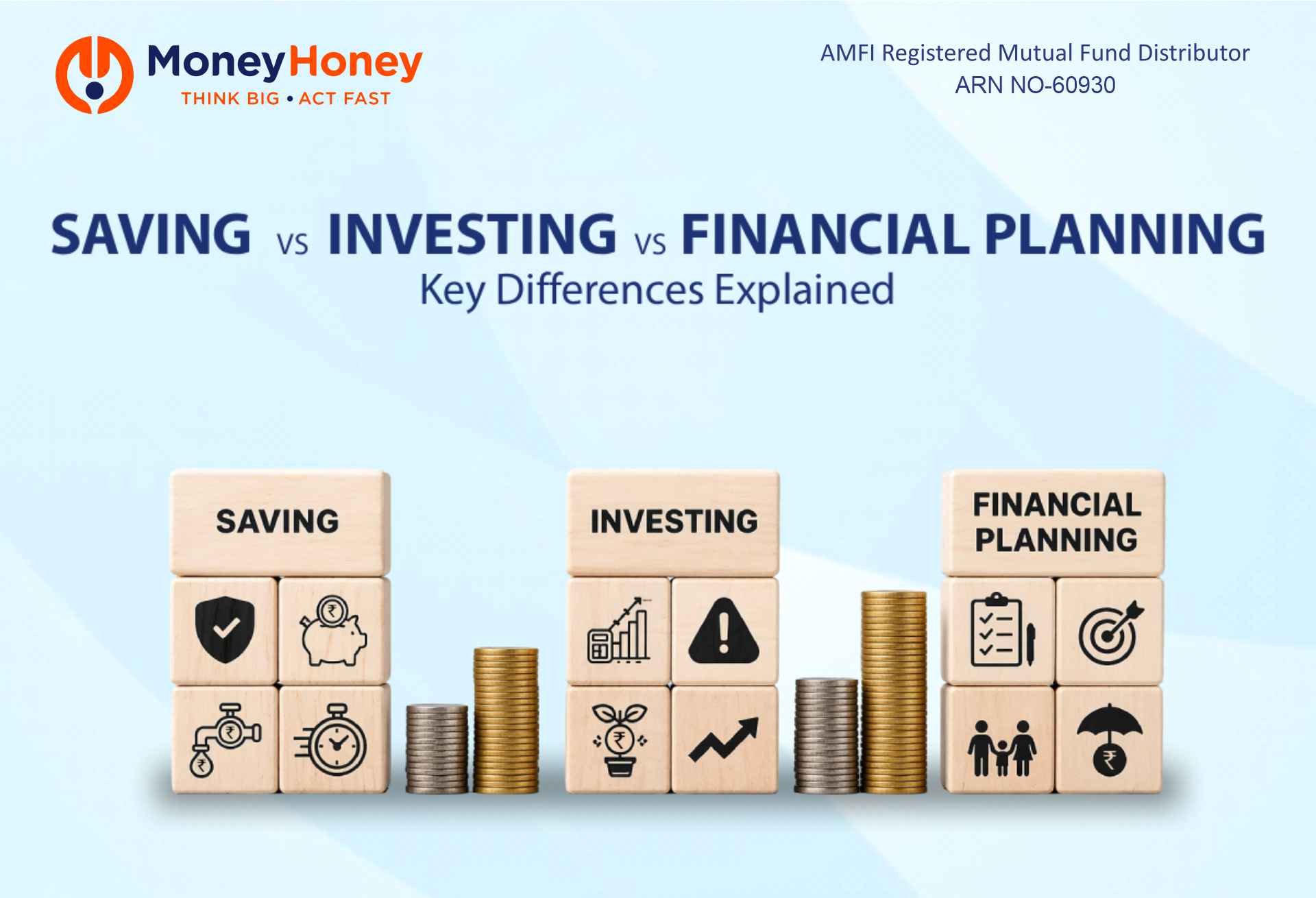
Saving, investing, and financial planning are often used as if they mean the same thing. In reality, they represent three very different ways of managing money-and understanding this difference can change how you approach your finances.
Many people focus heavily on saving but struggle to grow their wealth. Others jump into investing without a clear direction. The missing piece in both cases is usually financial planning.
When you understand how these three fit together, money decisions become less confusing and more purposeful.
What Is Saving?
Saving is where most financial journeys begin. It simply means setting aside a portion of your income for future use, usually in places where your money remains safe and easily accessible.
Think of your savings account or a fixed deposit-these are designed to protect your money rather than grow it significantly. The idea is to have funds available when you need them, whether for an emergency, a planned purchase, or short-term goals.
Saving gives you stability. It creates a cushion that protects you from financial shocks. But on its own, it has a limitation-over time, inflation can reduce the real value of your money.
What Is Investing?
Investing takes a different approach. Instead of just protecting your money, it focuses on growing it.When you invest, your money is put into assets like mutual funds, stocks, or bonds, with the expectation that it will increase in value over time. Unlike saving, investing involves some level of risk, because returns are not fixed.
However, this risk is also what creates the potential for higher returns, especially over longer periods. For goals that are years or even decades away-like retirement or children’s education-investing becomes essential.In simple terms, if saving helps you preserve money, investing helps you build wealth.
What Is Financial Planning?
Financial planning is where everything comes together.It is not just about choosing where to put your money-it’s about understanding why you are doing it in the first place. It connects your income, expenses, savings, investments, and goals into a single, structured approach.
For example, you may be saving for emergencies, investing for long-term growth, and managing insurance for protection. Financial planning ensures that all of these decisions are aligned with your life goals.Without a plan, even good financial habits can feel scattered. With a plan, every action has a purpose.
Key Differences Between Saving, Investing, and Planning
The easiest way to understand the difference is to look at the role each one plays.Saving is about safety and access. It’s your fallback when something unexpected happens or when you need money in the near term.Investing is about growth. It helps your money work for you over time, especially when you’re planning for long-term goals.
Financial planning, on the other hand, is the strategy behind both. It decides how much you should save, where you should invest, and how everything fits into your overall financial life.So while saving and investing are actions, financial planning is the thinking behind those actions.
When Should You Save vs Invest?
This is where many people get confused.If your goal is short-term or you might need the money soon, saving is usually the better choice. It keeps your money stable and easily available.
But if your goal is long-term and you have time on your side, investing becomes more relevant. It allows your money to grow and potentially outpace inflation.In reality, it’s not about choosing one over the other. Most people need both-saving for security and investing for growth. The balance between the two depends on your goals and timeline.
How Financial Planning Brings Everything Together
Financial planning ensures that you’re not just saving or investing randomly.It helps you decide how much to keep aside for emergencies, how much to invest for future goals, and how to manage risks along the way. It also gives you a framework to adjust your decisions as your income, responsibilities, and priorities change.
For instance, early in your career, you might focus more on investing for growth. Later, as responsibilities increase, you may need to balance that with stability and protection.A plan keeps all these moving parts aligned. It brings clarity to decisions that would otherwise feel uncertain.
Conclusion
Saving, investing, and financial planning are not competing ideas-they are parts of the same system. Saving helps you stay prepared, investing helps you grow, and financial planning ensures that both are working toward your goals.
Instead of focusing on one in isolation, the real value comes from using all three together in a structured way. When your financial decisions are guided by clarity and purpose, managing money becomes far more effective-and far less stressful.
FAQs
What is the main difference between saving and investing?
Saving focuses on safety and easy access to money, while investing focuses on growing your money over time.
Do I need financial planning if I already invest?
Yes, financial planning ensures your investments are aligned with your goals and overall financial situation.
Should I save or invest first?
It’s usually better to build an emergency fund first, then start investing for long-term goals.
Can I do financial planning on my own?
Yes, but having a structured approach is important to ensure all aspects of your finances are covered.
Is saving enough for long-term goals?
Saving alone may not be sufficient due to inflation-investing is usually needed for long-term growth.