


Introduction
One of the most powerful concepts in investing is also one of the simplest to understand - compounding. Yet, many investors underestimate its impact, especially in the early years when growth seems slow.
For Indian investors using Systematic Investment Plans (SIPs), compounding plays a crucial role in turning small, regular investments into meaningful wealth over time. It doesn’t rely on timing the market or making large investments. Instead, it rewards consistency, patience, and time.
Understanding how compounding works-and how SIPs enhance its effect-can fundamentally change the way you approach long-term investing.
What Is Compounding in Simple Terms?
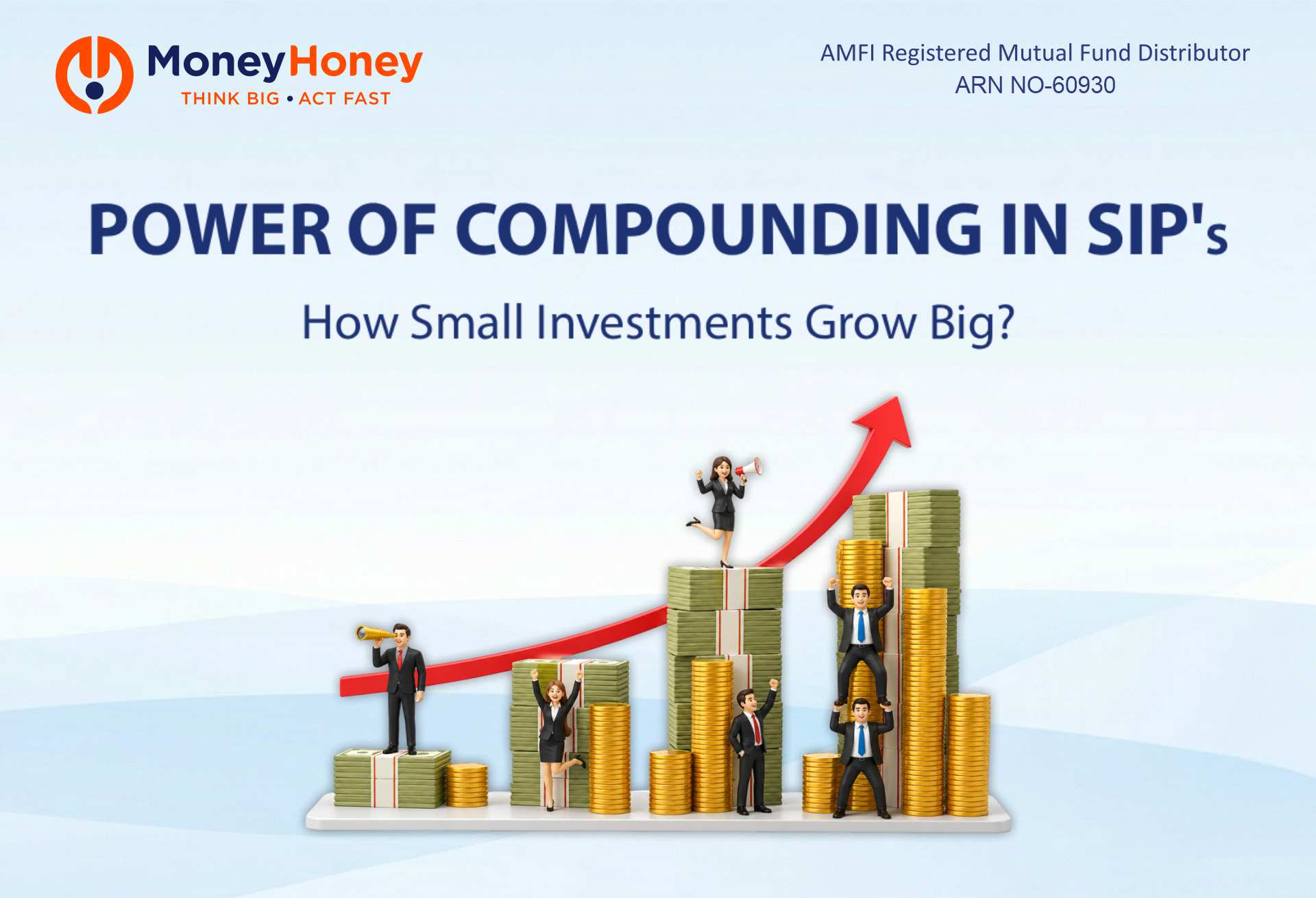
Compounding is the process where your investment earns returns, and those returns start generating their own returns over time.
In simple terms, it’s not just your money growing - it’s your returns growing on past returns.
For example, if you invest ?1 lakh and earn 10% in a year, your investment becomes ?1.1 lakh. In the next year, if you again earn 10%, the return is calculated on ?1.1 lakh, not the original ?1 lakh. Over time, this creates a snowball effect.
In the early stages, the growth may appear gradual. But as time passes, the impact becomes significantly more visible. This is why compounding is often described as a long-term wealth creation engine rather than a short-term strategy.
How SIP Amplifies Compounding
SIPs take the concept of compounding a step further by adding consistency to the equation. Instead of investing a large amount once, SIPs involve investing regularly, which allows multiple investment cycles to compound simultaneously.
Each monthly investment becomes a separate contributor to your overall portfolio. Over time, earlier investments benefit from compounding for longer durations, while newer investments continue to add to the base.
SIPs also help navigate market volatility. When markets are down, you accumulate more units. When markets recover, these units contribute to growth. This combination of disciplined investing and compounding creates a strong foundation for long-term wealth.
The real advantage of SIPs is that they make compounding accessible, even for investors who start with relatively small amounts.
Early Start vs Late Start Example
The timing of when you start investing has a significant impact on how compounding works in your favor.
Consider two investors:
- Investor A starts investing ?5,000 per month at age 25
- Investor B starts investing ?10,000 per month at age 35
Even though Investor B invests a higher monthly amount, Investor A often ends up with a larger corpus by retirement. The reason is simple - Investor A’s investments get an additional 10 years to compound.
This highlights an important insight: time can be more powerful than the amount invested.
Starting early doesn’t necessarily mean investing large sums. Even modest investments, when given enough time, can grow substantially.
Role of Time vs Amount Invested
Many investors believe that building wealth requires large investments. While the amount invested does matter, time often plays a more decisive role.
When investments are held for longer periods, compounding has more cycles to work through. This creates exponential growth rather than linear growth.
To put it simply:
- Increasing your investment amount helps, but only to a certain extent
- Increasing your investment duration can dramatically amplify outcomes
This is why long-term goals like retirement planning benefit the most from SIP-based investing. The earlier the start and the longer the duration, the stronger the compounding effect.
What Breaks Compounding? (Interruptions & Withdrawals)
While compounding is powerful, it is also sensitive to disruptions.
Interruptions such as stopping SIPs during market downturns can reduce the overall impact. Similarly, frequent withdrawals break the compounding cycle by removing capital that could have continued to grow.
Another common issue is shifting investments too frequently based on short-term performance. This prevents investments from staying long enough to benefit from sustained compounding.
In essence, compounding requires consistency and continuity. Any break in the process reduces its long-term effectiveness.
How to Maximize Compounding in SIPs
To make the most of compounding, investors don’t need complex strategies, but they do need discipline and clarity.
A few practical approaches can significantly improve outcomes:
- Start as early as possible, even if the amount is small
- Stay consistent with SIPs across market cycles
- Avoid stopping investments during downturns
- Gradually increase SIP amounts as income grows
- Align investments with long-term goals rather than short-term market movements
It’s also important to choose appropriate mutual funds based on risk profile and time horizon. While compounding works across investments, the quality of the underlying asset plays a role in determining the final outcome.
Conclusion
The power of compounding in SIPs lies not in complexity, but in consistency over time. Small, regular investments may seem insignificant in the beginning, but given enough time, they can grow into substantial wealth.
For investors, the key is to start early, stay invested, and avoid disruptions that break the compounding cycle. Rather than focusing on short-term market movements, maintaining a long-term perspective allows compounding to do its work effectively. A disciplined approach remains the most important driver of long-term success.
FAQs
What is compounding in SIP?
Compounding in SIP refers to earning returns on both your invested amount and the returns generated over time.
How does SIP help in compounding?
SIPs allow regular investments, enabling multiple contributions to compound over different time periods.
Is compounding better with longer investment duration?
Yes, the longer you stay invested, the stronger the compounding effect.
Can I achieve compounding with small SIP amounts?
Yes, even small amounts can grow significantly over time if invested consistently.
What affects compounding negatively?
Stopping SIPs, frequent withdrawals, and short investment durations can reduce the impact of compounding.